
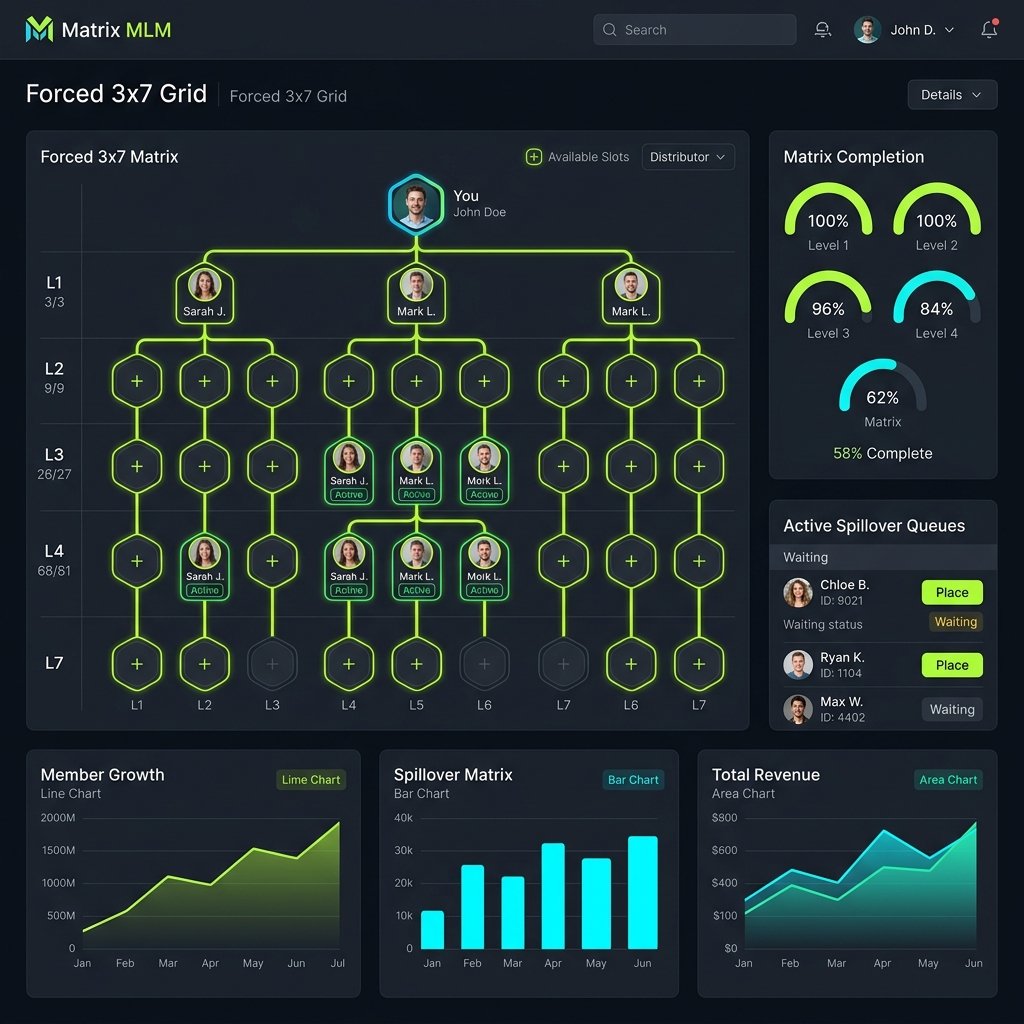
The Matrix MLM plan, also known as the Forced Matrix Plan, is defined by its fixed width and depth parameters. Unlike binary or unilevel plans that allow unlimited horizontal downline growth, a Matrix plan restricts frontline width. Common structures include 3x7, 4x4, or 5x5 configurations, where the first number represents the maximum width and the second is the depth limit.
Key Takeaways
- ✓ Forced matrix plans operate on a rigid grid format (e.g., 3x7 or 5x5 structures).
- ✓ Distributors have a limited frontline width, forcing spillover into deeper levels.
- ✓ Spillovers execute from top-to-bottom, left-to-right inside the network tree.
- ✓ Predictable structural limits help companies forecast payout margins accurately.
1. The Mechanics of Forced Placements
When a distributor recruits a new member, the software checks if their immediate frontline is full. If all slots are occupied, the algorithm searches for the next vacant position in the nearest lower level, placing the recruit from top-to-bottom and left-to-right. This automated placement process is called "spillover".
Need MLM Software Development?
Talk to our direct selling architects to build a secure, high-concurrency MLM system tailored for your compensation plan.
2. Benefits of the Forced Structure
Matrix plans offer unique benefits for organizations targeting controlled expansion:
3x4 Forced Matrix Node Count per Tier
- Team Synergy: Spillover logic systematically fills downline vacancies, enabling inactive distributors to benefit from active upline efforts.
- Predictable Budgets: Because width and depth are strictly capped, financial analysts can calculate the absolute maximum payout threshold, securing corporate margins.
Sanjay Mehta
LinkedIn ProfileDirect Selling Systems Architect & Software Engineer
Expert in high-concurrency database locking, double-entry financial ledgers, auto-spillover placement logic, and blockchain Web3 smart contract audits with over 8+ years of custom MLM development experience across India.