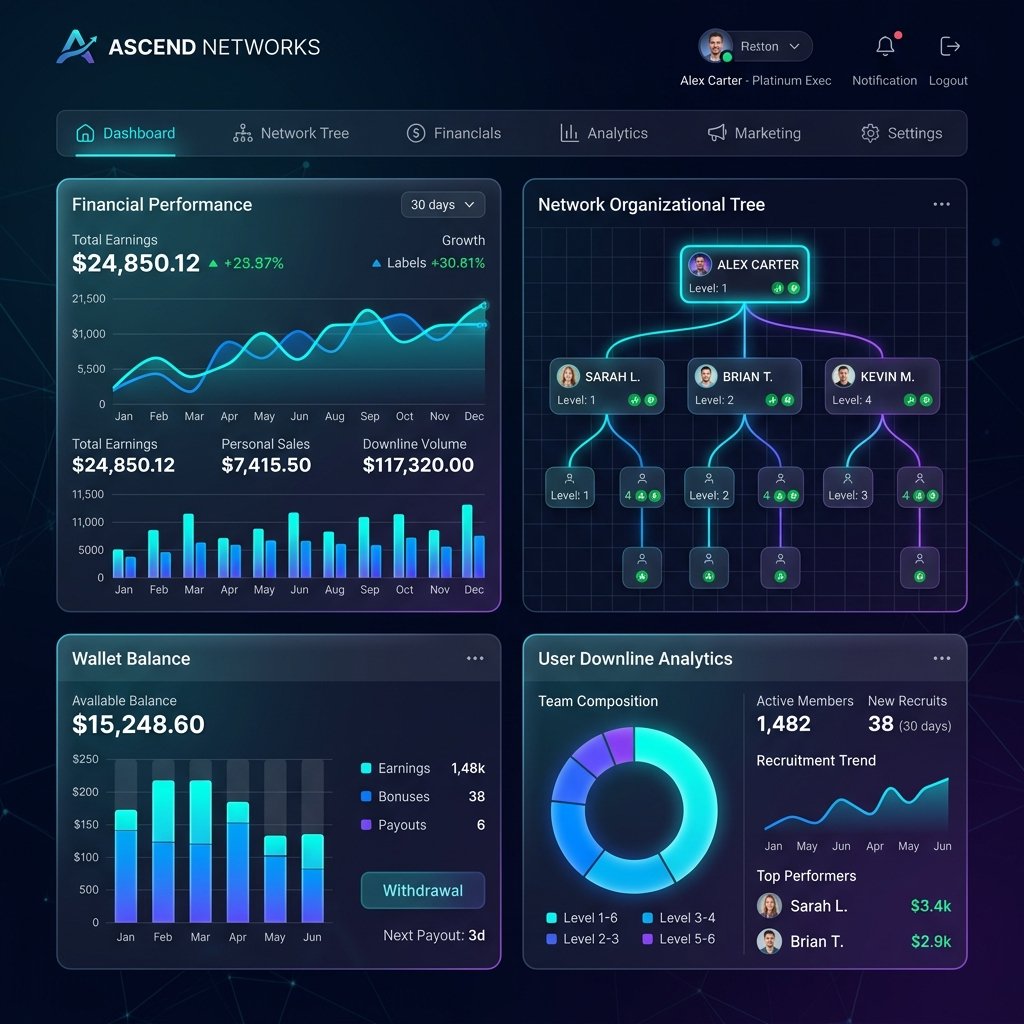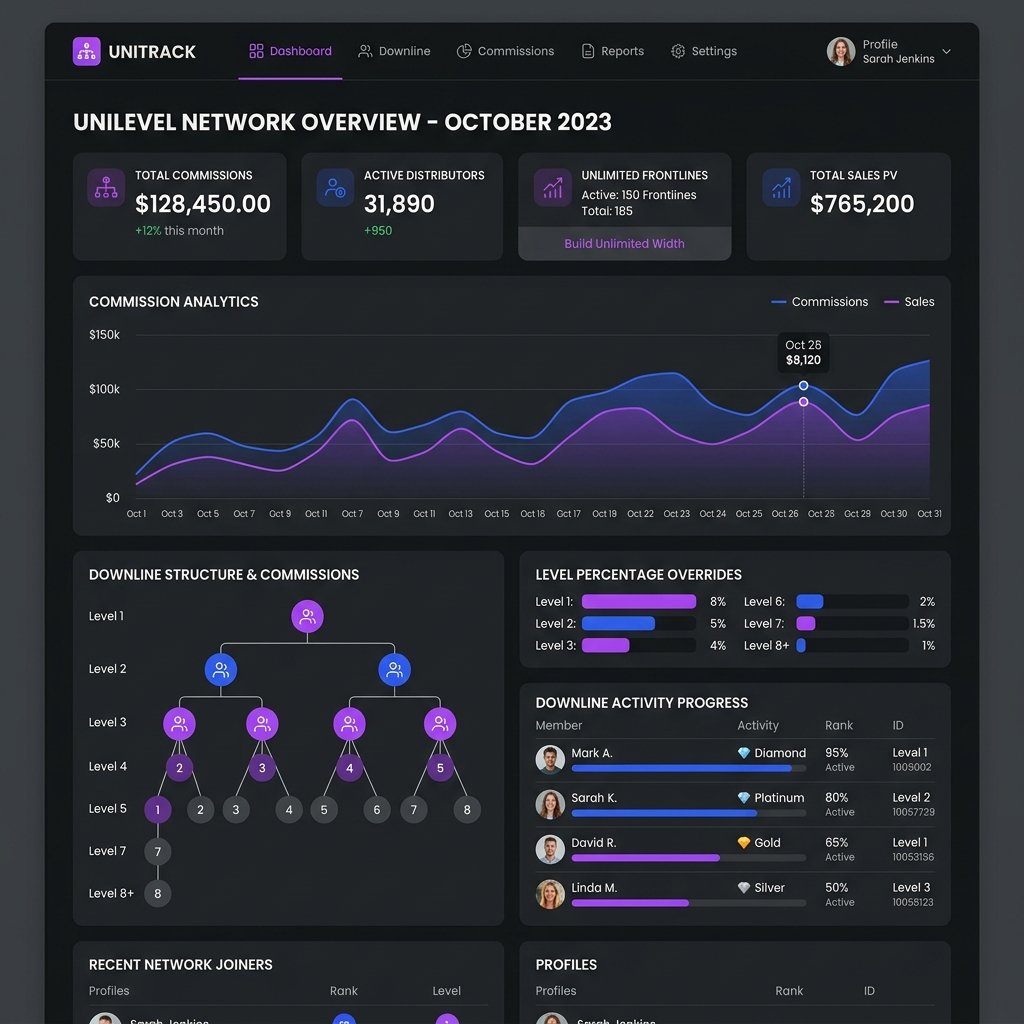
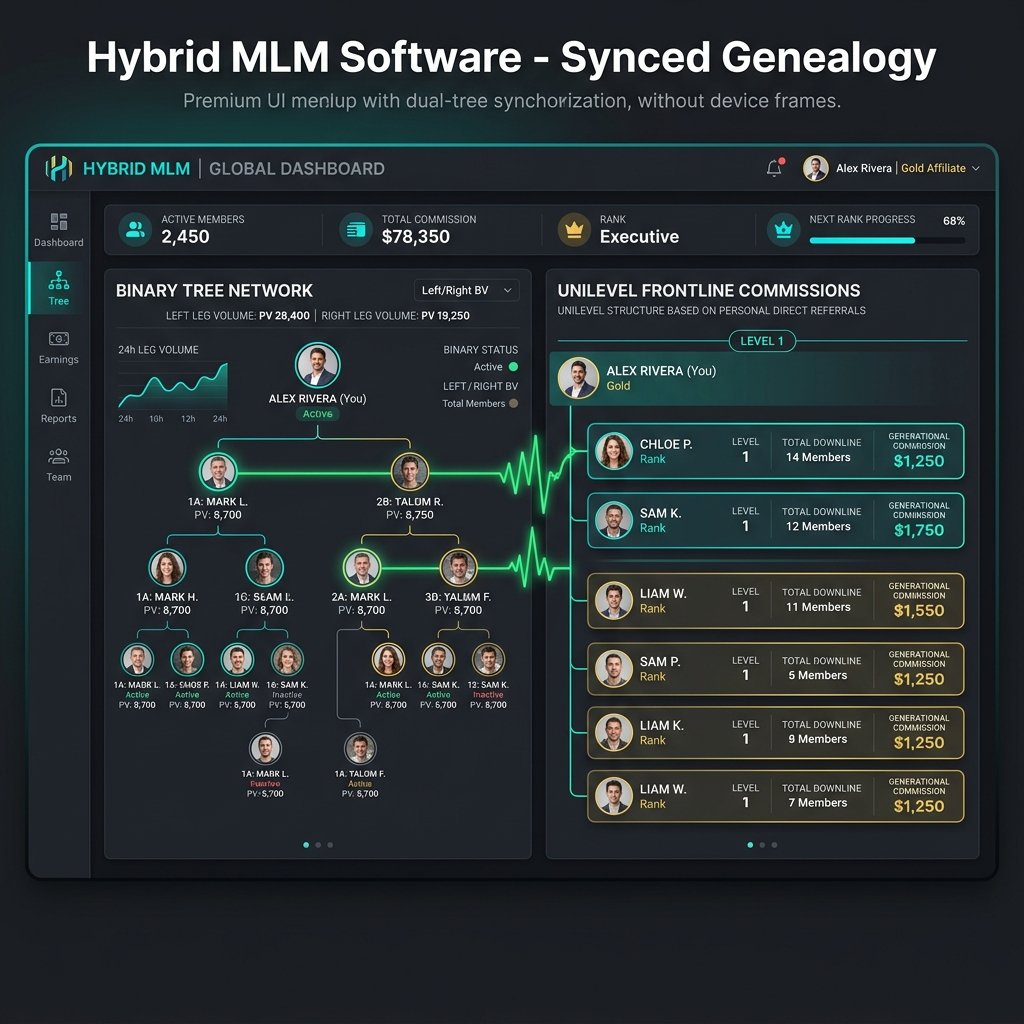
A Hybrid MLM plan merges elements of different structures—most commonly Binary and Unilevel—to build a balanced compensation network. It utilizes the binary leg structure to drive rapid distributor recruitment, while concurrently linking those accounts to a unilevel structure that compiles product repurchases and rank promotions.
Key Takeaways
- ✓ Hybrid plans link Unilevel tree product sales with Binary tree recruitment speed.
- ✓ Registrations dynamically map nodes to two distinct genealogy structures.
- ✓ Database writes must be synchronized to prevent layout and ledger errors.
- ✓ Combines short-term team building speed with long-term e-commerce stability.
1. Dual-Tree Synchronization Challenges
The technical challenge of Hybrid plans is tree synchronization. When a new registration occurs, the database must write parent-child nodes into two distinct structures: a two-leg binary tree (with spillovers) and a frontline-based unilevel tree. If database operations are not atomic, transaction race conditions can cause payout discrepancy issues.
Need MLM Software Development?
Talk to our direct selling architects to build a secure, high-concurrency MLM system tailored for your compensation plan.
2. Fine-Tuning Capping & Level Ratios
Since commissions are calculated from multiple streams (e.g., binary matching plus unilevel level bonuses), admin panels must feature simulation tools. This allows owners to run historical calculations to test if combined payouts exceed corporate budgets.
Single Registration & Dual-Tree Mapping
Harsh Mehta
LinkedIn ProfileDirect Selling Systems Architect & Software Engineer
Expert in high-concurrency database locking, double-entry financial ledgers, auto-spillover placement logic, and blockchain Web3 smart contract audits with over 8+ years of custom MLM development experience across India.